Tasmania trip guides
Things to do in Queenstown: a practical 3-day guide
Plan three days in Queenstown around West Coast Wilderness Railway, Eric Thomas Galley Museum, Spion Kop lookout and local events across West Coast.
Plan three days in Queenstown around West Coast Wilderness Railway, Eric Thomas Galley Museum, Spion Kop lookout and local events across West Coast.
Queenstown suits travellers looking for mining landscapes, heritage rail, mountain roads and a resilient arts community. This three-day framework keeps nearby experiences together and leaves enough flexibility for weather, opening hours and the events happening across West Coast while you are there.
Why visit Queenstown?
The best trip is more than a race through landmarks. Queenstown offers a practical base for discovering a distinctive part of Tasmania, meeting local makers and spending time in landscapes that shape the community. Choose a few priorities, book anything capacity-limited and let one local event give the visit a date-specific focus.
Before leaving, check whose Country you will visit and look for Aboriginal-owned tours, cultural centres and interpretation created with local knowledge holders. Follow access rules, stay on public routes and treat wildlife, coastlines, waterways and heritage places with care.
Top things to do in Queenstown
- West Coast Wilderness Railway: Reserve a journey and confirm its current departure point and route.
- Eric Thomas Galley Museum: Use the collection to understand mining, rail and community history.
- Spion Kop lookout: Climb the short town track for the dramatic surrounding hills and streets.
- Local art and heritage streets: Look beyond the denuded slopes to galleries, theatre and community-led renewal.
A practical three-day Queenstown itinerary
Day 1: Get to know the local centre
Begin with West Coast Wilderness Railway. Reserve a journey and confirm its current departure point and route. Follow with eric thomas galley museum, but keep the pace comfortable enough for lunch at an independent local venue. In the evening, check for a market, performance, match, exhibition or community gathering close to your accommodation.
Day 2: Make the main regional outing
Give the day to Spion Kop lookout. Climb the short town track for the dramatic surrounding hills and streets. Confirm bookings, access, weather and travel time the night before. Pack water and sun or rain protection, and avoid attaching a fixed evening reservation to an activity that can run late.
Day 3: Choose depth over distance
Explore Local art and heritage streets. Look beyond the denuded slopes to galleries, theatre and community-led renewal. If time and energy remain, consider this onward idea: Strahan for Macquarie Harbour, or Lake St Clair via a winding drive with generous time. It is often better to save that extension for another night than to add hours of rushed driving.
Find events in Queenstown
Local events can reveal the place in a way a standard attraction cannot. Search Find What’s On for events around Queenstown, then check again shortly before departure as new live music, theatre, markets, sport, workshops and family activities may be added after you book.
When an event matters to the trip, confirm the date, venue, age or ticket rules and accessibility directly with the organiser. Allow realistic travel and parking time, especially for regional venues and festival periods.
When to visit Queenstown
Summer provides long daylight for touring, autumn brings colour, winter rewards prepared travellers with quiet towns and alpine weather, and spring can change quickly. Carry layers year-round and check road, ferry, snow, wind and park alerts before each day.
Getting around
A car is the practical choice for this itinerary. Confirm fuel, parking and road conditions, avoid packing too many distant stops into one day, and allow extra time for wildlife, weather and slower regional roads.
Where to go next
Strahan for Macquarie Harbour, or Lake St Clair via a winding drive with generous time.
Plan responsibly before you travel
Opening hours, tour schedules, park access, permits, road conditions and public transport can change. Start with the official Tasmania tourism destination guide, then confirm critical details with parks agencies, transport providers, visitor information centres and individual operators.
Check whether each stop meets your mobility, sensory and access requirements rather than relying on a general accessibility label. Carry reusable water, leave no rubbish, use marked tracks and avoid geotagging culturally sensitive or fragile places.
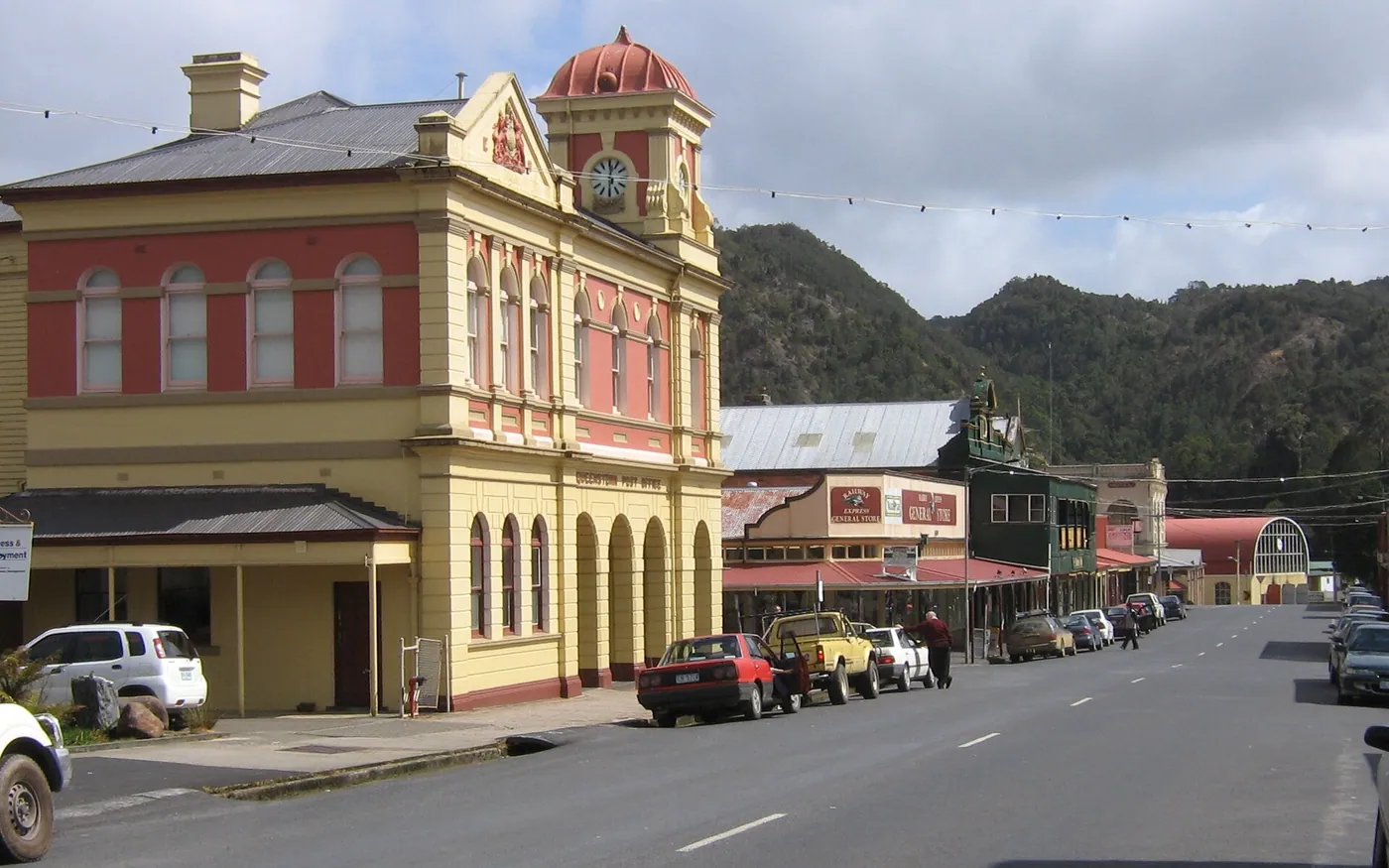
Destination photo: Orr Street, Queenstown by Scott Davis, CC BY 2.5. The image has been cropped for this guide.